Best Tinder Materials Found in the Wild for Reliable Fire Starting
Jeff Davis | https://fieldtofeast.com
 0
0 0
0 0
0 0
0 0
0
Out in the woods, fire is never just about comfort. It is warmth after a long sit in a deer stand, dry socks after crossing a creek too deep for your boots, hot coffee at first light, and in a true emergency, a hard line between inconvenience and danger. I have built fires in hardwood hollows after sleet, on frosty riverbanks before dawn, and beside camp after a wet day of tracking through laurel and pine. In every case, the same lesson keeps proving itself: the best firewood in the world does you no good if your tinder is poor.
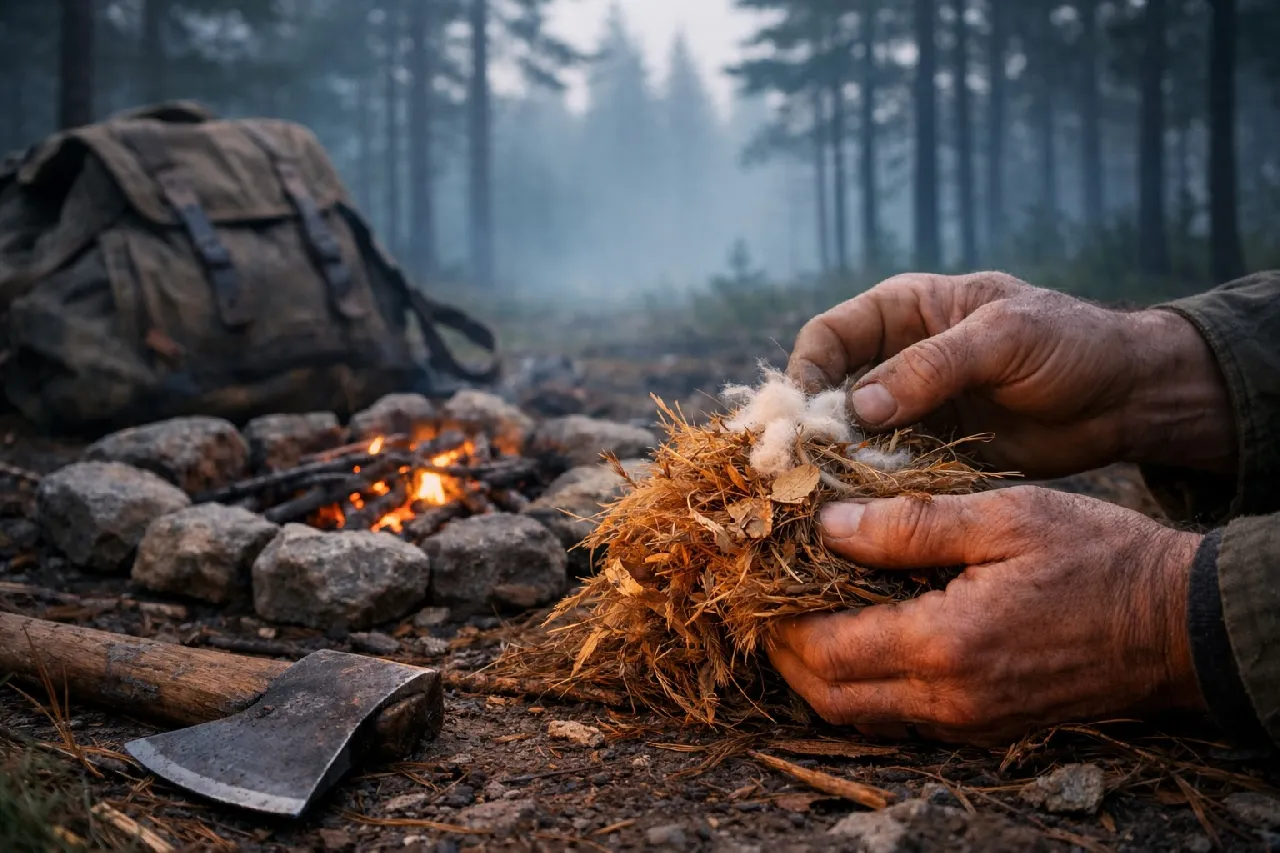
Knowing the best tinder materials found in the wild is one of those old skills that still matters. You do not need fancy gear to get flame going, though good tools help. What you need is an eye for what catches quickly, what stays dry when the weather turns, and what burns long enough to light your kindling. Once you learn where to look, the forest starts showing you fire everywhere.
What Makes Good Wild Tinder
Good tinder has one job: catch a spark, ember, or small flame fast and transfer that heat into your next fuel. The best natural tinder is dry, fine, fibrous, and easy to fluff up so oxygen can move through it. If it feels crisp, shreds easily, and has a lot of surface area, it is usually worth trying. If it is damp, dense, or oily in the wrong way, it may smolder without ever giving you that quick burst of flame you need.
In the field, I look for three things before I ever strike a ferro rod or touch a match. First, I want tinder that is off the ground whenever possible, because ground moisture creeps into everything. Second, I want more tinder than I think I need. Third, I want a progression ready to go: tinder, then pencil-thin kindling, then finger-thick fuel, then larger wood. Folks often fail not because they found bad tinder, but because they were not prepared to feed the fire while it was still young and fragile.
Dry Grass and Fine Meadow Thatch
Dry grass is one of the oldest and most available tinder materials around. In late summer, fall, and even winter, you can often find pale, dead grass standing above the wet ground. That standing grass is usually far drier than anything matted down underneath. Gather it by hand, strip out the damp stems, and twist the driest fibers into a loose bird’s nest. If you pack it too tight, it chokes itself. If you keep it airy, one spark can turn it into flame fast.
The downside to grass is that it burns quick and hot, then disappears. That means you need kindling ready before you light it. I like grass best when paired with finer bark fibers or shredded plant down to give it a little more body.
Cedar Bark and Other Fibrous Bark
If I had to choose one dependable wild tinder in many parts of the country, cedar bark would be high on the list. The stringy bark from dead limbs or hanging strips can be teased apart into a fluffy bundle that catches beautifully. Eastern red cedar, juniper, and similar bark all have that dry, fibrous character that takes a spark well when prepared right.
You do not want to rip bark off healthy living trees unless you absolutely have to. Look instead for dead branches, loose shreds, and weathered pieces caught in crotches or hanging from old trunks. Work the fibers between your palms until they soften into a nest. A lot of people stop too early. The finer and looser you make it, the better it performs.
Birch Bark
Birch bark is a gift in country where birch grows. Even when the woods are damp, the papery outer layers often hold enough natural oils to catch flame. It lights more easily than many other barks and can help bridge the gap between tinder and kindling. Peel only loose bark from downed limbs or naturally shedding trunks if possible. Thin curls and scrapings work better than thick slabs.
What makes birch bark especially valuable is that it can burn a little longer than grass or leaf litter. In bad weather, that extra burn time matters. A small handful tucked in a pocket before heading out is the kind of habit that pays you back when the wind bites.
Dead Leaves and Leaf Litter
Dead leaves can work, but they are not all equal. Oak leaves, especially when dry and curled, can be useful. Leaves that are still hanging in brush or caught under blowdowns are often drier than what you find underfoot. Crush them lightly and mix them with finer material instead of relying on them alone. Flat leaves tend to smother unless broken up and fluffed.
I think of leaves as support tinder more than prime tinder. They help build volume in a tinder bundle, but I would rather have bark fibers, dry grass, or seed fluff at the center if I am working from spark.
Cattail Fluff and Seed Down
Cattail fluff, milkweed down, thistle fluff, and similar seed fibers can ignite with impressive speed. On a calm day they almost feel like cheating. The trouble is that they burn so fast a beginner can lose the flame before it ever reaches the next stage. That is why I like mixing seed down into a larger nest of shredded bark or dry grass. It acts like a spark magnet while the coarser material holds the flame long enough to build on it.
If you forage marsh edges, field margins, or pond banks, you can often gather this kind of tinder in abundance. Just keep it dry. A little moisture turns miracle fluff into useless clump in a hurry.
Pine Needles and Resin-Rich Material
Dry pine needles are common and useful, especially when they have been sheltered under low limbs or tucked against the trunk. By themselves they can be stubborn if damp, but dry needles mixed with shredded bark make a solid nest. Where pines grow, I also keep an eye out for resin-rich wood, fatwood splinters, and pitchy knots from old stumps and dead lower branches. While fatwood is often more kindling than true tinder, feathered scrapings from it can catch readily and burn with a strong, oily flame.
That resin smell on your hands after shaving a stick of fatwood is one of the best scents in the woods when the weather has gone bad. It smells like insurance.
Inner Bark and Bast Fibers
Certain trees and plants offer fibrous inner bark that can be processed into good tinder. Basswood, cedar, and some other species have bark layers that separate into soft strands. The trick is effort. Raw strips are not enough. You need to scrape, fray, and work them until they become fine and airy. That labor pays off, especially if all the obvious tinder around you is wet.
This is one of those skills where practice at home matters. Learn your local trees before you need them, because bark identification is not the kind of thing you want to guess at in failing light.
Finding Dry Tinder in Wet Weather
Anybody can light dry tinder on a pleasant afternoon. The real test comes after rain, in freezing fog, or when the whole woods feels soaked. That is when you stop looking at the forest floor and start looking up. Dead twigs trapped in standing brush, bark tucked under overhangs, old bird nest material, and the undersides of deadfall can all hide usable tinder. Split open dead standing wood and sometimes the inside is dry even when the outside is slick.
One cold November evening I came out of a long hunt with numb fingers and a pack heavier than I liked. The rain had quit, but every log looked black with water. What got my fire going was not anything on the ground. It was cedar bark peeled from a dead snag, plus fine shavings cut from the dry interior of a split branch. That fire started small, mean, and smoky, then settled into a steady burn that dried the rest of my fuel. Wet weather teaches you to think in layers, not just materials.
How to Prepare Wild Tinder the Right Way
The best tinder in the world still needs preparation. Break, shred, scrape, twist, and fluff until the material has as much surface area as possible. Build a tinder bundle with the finest fibers at the center and slightly coarser material around the outside. Leave enough room for air. Then place it where your flame will be protected from wind but not starved of oxygen.
If you are using a ferro rod, get the sparks landing deep into that fine center. If you are using a match or lighter, touch the flame to the edge and let it climb inward. Once the tinder catches, feed it immediately with the smallest dry sticks you have. Most failed fires are rushed at the wrong moment. Either people smother the flame with oversized sticks, or they admire the tinder flame too long and let it die out.
Common Mistakes Beginners Make
The biggest mistake is trusting appearance over feel. Something can look dry and still hold enough moisture to fail. Snap-test your small twigs. Work your tinder in your hands. Smell it. Dry material often tells on itself. Another mistake is collecting too little. Gather a double handful when you think one is enough, and collect kindling before lighting anything.
There is also a habit of depending on one material alone. The woods usually offer better results when you blend tinder types. A little fluff for ignition, bark fiber for body, and some resinous scrapings for staying power will outperform a single weak nest most days.
Why This Skill Still Matters on the Homestead and in the Backwoods
Even for folks who live close to home, learning natural tinder has real value. Storms cut power. Chores run late. A walk to check fence lines turns longer than expected. Kids and grandkids need these skills handed down before convenience teaches them to ignore old knowledge. On a homestead, fire is part of cooking, heating, clearing brush, and plain old self-reliance. In the woods, it is one of the simplest ways to turn a bad situation around.
The best tinder materials found in the wild are not rare. They are common things most people walk by without noticing. Dry grass waving at a field edge. Cedar bark hanging loose from a dead limb. Birch curls peeling from a fallen branch. Cattail fluff glowing in low sun. Once you know what you are seeing, the land stops looking empty and starts looking useful.
That is a good way to move through country, whether you are hunting, foraging, or just learning to depend a little less on store-bought solutions. Fire starts long before the spark. It starts with paying attention.
Knowing the best tinder materials found in the wild is one of those old skills that still matters. You do not need fancy gear to get flame going, though good tools help. What you need is an eye for what catches quickly, what stays dry when the weather turns, and what burns long enough to light your kindling. Once you learn where to look, the forest starts showing you fire everywhere.
What Makes Good Wild Tinder
Good tinder has one job: catch a spark, ember, or small flame fast and transfer that heat into your next fuel. The best natural tinder is dry, fine, fibrous, and easy to fluff up so oxygen can move through it. If it feels crisp, shreds easily, and has a lot of surface area, it is usually worth trying. If it is damp, dense, or oily in the wrong way, it may smolder without ever giving you that quick burst of flame you need.
In the field, I look for three things before I ever strike a ferro rod or touch a match. First, I want tinder that is off the ground whenever possible, because ground moisture creeps into everything. Second, I want more tinder than I think I need. Third, I want a progression ready to go: tinder, then pencil-thin kindling, then finger-thick fuel, then larger wood. Folks often fail not because they found bad tinder, but because they were not prepared to feed the fire while it was still young and fragile.
Best Tinder Materials Found in the Wild
Dry Grass and Fine Meadow Thatch
Dry grass is one of the oldest and most available tinder materials around. In late summer, fall, and even winter, you can often find pale, dead grass standing above the wet ground. That standing grass is usually far drier than anything matted down underneath. Gather it by hand, strip out the damp stems, and twist the driest fibers into a loose bird’s nest. If you pack it too tight, it chokes itself. If you keep it airy, one spark can turn it into flame fast.
The downside to grass is that it burns quick and hot, then disappears. That means you need kindling ready before you light it. I like grass best when paired with finer bark fibers or shredded plant down to give it a little more body.
Cedar Bark and Other Fibrous Bark
If I had to choose one dependable wild tinder in many parts of the country, cedar bark would be high on the list. The stringy bark from dead limbs or hanging strips can be teased apart into a fluffy bundle that catches beautifully. Eastern red cedar, juniper, and similar bark all have that dry, fibrous character that takes a spark well when prepared right.
You do not want to rip bark off healthy living trees unless you absolutely have to. Look instead for dead branches, loose shreds, and weathered pieces caught in crotches or hanging from old trunks. Work the fibers between your palms until they soften into a nest. A lot of people stop too early. The finer and looser you make it, the better it performs.
Birch Bark
Birch bark is a gift in country where birch grows. Even when the woods are damp, the papery outer layers often hold enough natural oils to catch flame. It lights more easily than many other barks and can help bridge the gap between tinder and kindling. Peel only loose bark from downed limbs or naturally shedding trunks if possible. Thin curls and scrapings work better than thick slabs.
What makes birch bark especially valuable is that it can burn a little longer than grass or leaf litter. In bad weather, that extra burn time matters. A small handful tucked in a pocket before heading out is the kind of habit that pays you back when the wind bites.
Dead Leaves and Leaf Litter
Dead leaves can work, but they are not all equal. Oak leaves, especially when dry and curled, can be useful. Leaves that are still hanging in brush or caught under blowdowns are often drier than what you find underfoot. Crush them lightly and mix them with finer material instead of relying on them alone. Flat leaves tend to smother unless broken up and fluffed.
I think of leaves as support tinder more than prime tinder. They help build volume in a tinder bundle, but I would rather have bark fibers, dry grass, or seed fluff at the center if I am working from spark.
Cattail Fluff and Seed Down
Cattail fluff, milkweed down, thistle fluff, and similar seed fibers can ignite with impressive speed. On a calm day they almost feel like cheating. The trouble is that they burn so fast a beginner can lose the flame before it ever reaches the next stage. That is why I like mixing seed down into a larger nest of shredded bark or dry grass. It acts like a spark magnet while the coarser material holds the flame long enough to build on it.
If you forage marsh edges, field margins, or pond banks, you can often gather this kind of tinder in abundance. Just keep it dry. A little moisture turns miracle fluff into useless clump in a hurry.
Pine Needles and Resin-Rich Material
Dry pine needles are common and useful, especially when they have been sheltered under low limbs or tucked against the trunk. By themselves they can be stubborn if damp, but dry needles mixed with shredded bark make a solid nest. Where pines grow, I also keep an eye out for resin-rich wood, fatwood splinters, and pitchy knots from old stumps and dead lower branches. While fatwood is often more kindling than true tinder, feathered scrapings from it can catch readily and burn with a strong, oily flame.
That resin smell on your hands after shaving a stick of fatwood is one of the best scents in the woods when the weather has gone bad. It smells like insurance.
Inner Bark and Bast Fibers
Certain trees and plants offer fibrous inner bark that can be processed into good tinder. Basswood, cedar, and some other species have bark layers that separate into soft strands. The trick is effort. Raw strips are not enough. You need to scrape, fray, and work them until they become fine and airy. That labor pays off, especially if all the obvious tinder around you is wet.
This is one of those skills where practice at home matters. Learn your local trees before you need them, because bark identification is not the kind of thing you want to guess at in failing light.
Finding Dry Tinder in Wet Weather
Anybody can light dry tinder on a pleasant afternoon. The real test comes after rain, in freezing fog, or when the whole woods feels soaked. That is when you stop looking at the forest floor and start looking up. Dead twigs trapped in standing brush, bark tucked under overhangs, old bird nest material, and the undersides of deadfall can all hide usable tinder. Split open dead standing wood and sometimes the inside is dry even when the outside is slick.
One cold November evening I came out of a long hunt with numb fingers and a pack heavier than I liked. The rain had quit, but every log looked black with water. What got my fire going was not anything on the ground. It was cedar bark peeled from a dead snag, plus fine shavings cut from the dry interior of a split branch. That fire started small, mean, and smoky, then settled into a steady burn that dried the rest of my fuel. Wet weather teaches you to think in layers, not just materials.
How to Prepare Wild Tinder the Right Way
The best tinder in the world still needs preparation. Break, shred, scrape, twist, and fluff until the material has as much surface area as possible. Build a tinder bundle with the finest fibers at the center and slightly coarser material around the outside. Leave enough room for air. Then place it where your flame will be protected from wind but not starved of oxygen.
If you are using a ferro rod, get the sparks landing deep into that fine center. If you are using a match or lighter, touch the flame to the edge and let it climb inward. Once the tinder catches, feed it immediately with the smallest dry sticks you have. Most failed fires are rushed at the wrong moment. Either people smother the flame with oversized sticks, or they admire the tinder flame too long and let it die out.
Common Mistakes Beginners Make
The biggest mistake is trusting appearance over feel. Something can look dry and still hold enough moisture to fail. Snap-test your small twigs. Work your tinder in your hands. Smell it. Dry material often tells on itself. Another mistake is collecting too little. Gather a double handful when you think one is enough, and collect kindling before lighting anything.
There is also a habit of depending on one material alone. The woods usually offer better results when you blend tinder types. A little fluff for ignition, bark fiber for body, and some resinous scrapings for staying power will outperform a single weak nest most days.
Why This Skill Still Matters on the Homestead and in the Backwoods
Even for folks who live close to home, learning natural tinder has real value. Storms cut power. Chores run late. A walk to check fence lines turns longer than expected. Kids and grandkids need these skills handed down before convenience teaches them to ignore old knowledge. On a homestead, fire is part of cooking, heating, clearing brush, and plain old self-reliance. In the woods, it is one of the simplest ways to turn a bad situation around.
The best tinder materials found in the wild are not rare. They are common things most people walk by without noticing. Dry grass waving at a field edge. Cedar bark hanging loose from a dead limb. Birch curls peeling from a fallen branch. Cattail fluff glowing in low sun. Once you know what you are seeing, the land stops looking empty and starts looking useful.
That is a good way to move through country, whether you are hunting, foraging, or just learning to depend a little less on store-bought solutions. Fire starts long before the spark. It starts with paying attention.


View all 0 comments